No Result
View All Result
Online EV Marketplace
No Result
View All Result

Model S/X go 88% of original range at 200,000 miles

Dr.Ev by Dr.Ev
04/26/2023
in Electric Cars
282 3
0
136
SHARES
1.2k
VIEWS
Share on Twitter


On average, the Tesla Model S and Model X lose less than 12% of range after 200,000 miles.

You might also like

Tesla Model3 Electric Cars Spied On Truck In India But Don’t Get Excited: Here’s Why [Video] – CarToq.com

California dealers seek to block VW Scout EV brand, which cut them out

Five facts about electric vehicles in 2024 – PinalCentral

That figure comes from a slide in the automaker’s just-released 2022 Impact Report, where Tesla also noted that it estimates most of its U.S.-market vehicles get scrapped when they reach that amount of mileage. In Europe, Tesla estimates most of its cars are scrapped at approximately 150,000 miles.
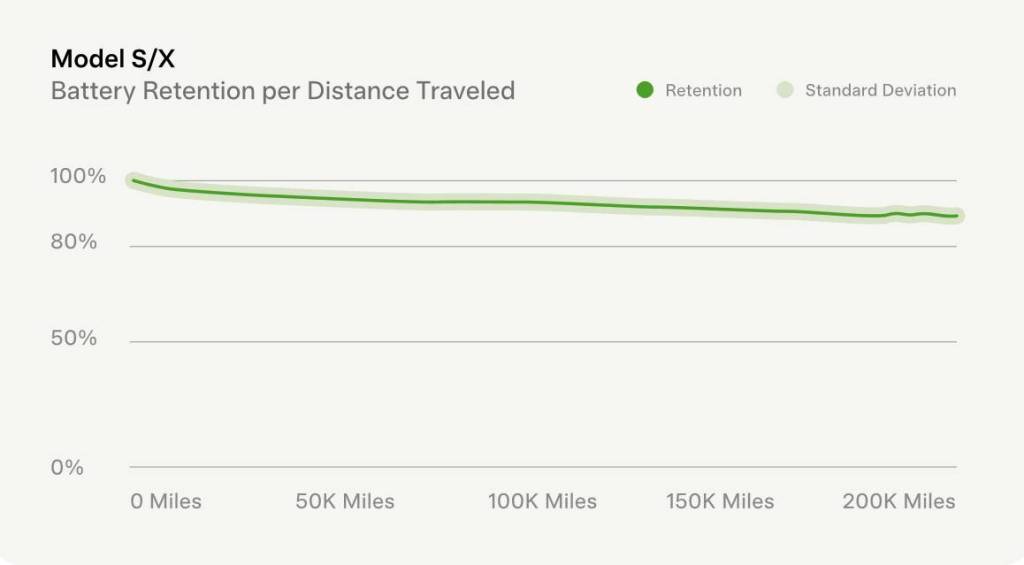
Tesla Model S and Model X range degradation (from Tesla 2022 Impact Report)

Tesla Model S and Model X range degradation (from Tesla 2022 Impact Report)


Tesla’s chart, which appears to relate to capacity with the term retention, suggests that Tesla customers aren’t experiencing much range loss over the full lives of their vehicles. It’s likely that in real-world terms, cars are likely able to get more miles out of that 88% of remaining capacity than they would have originally, thanks to software updates and the continuous improvements they bring.

In the report, Tesla also explains that age is another factor, also that it doesn’t have data on other newer chemistries. 

Earlier data, from around 2017, suggested that some Tesla Model S cars may still be over 90% of their original capacity after 150,000 miles—and that hasn’t been shown to be far off as more data accumulates. This chart itself continues to support that.
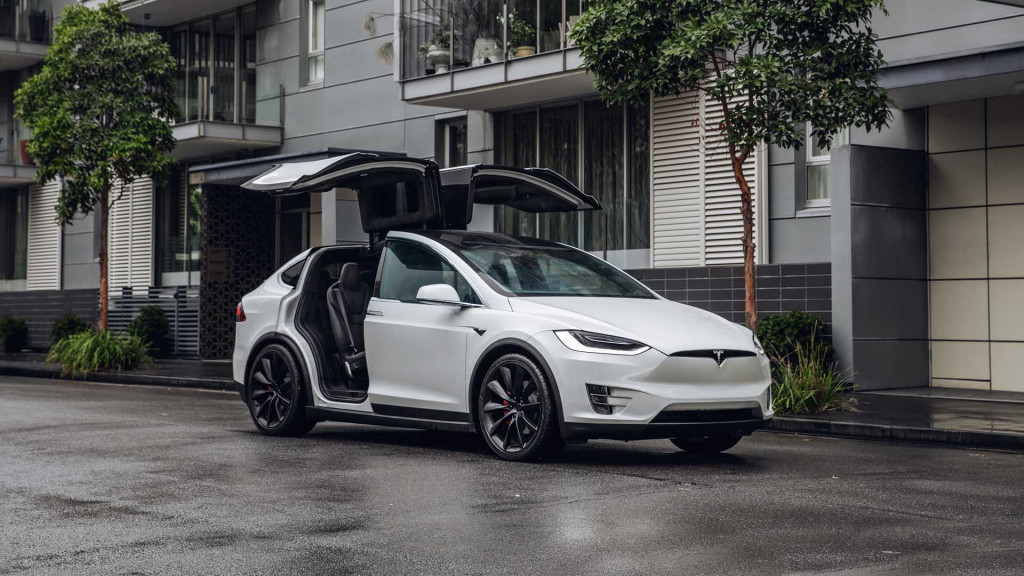
2020 Tesla Model X

2020 Tesla Model X

Tesla or not, battery degradation is exceedingly unlikely to brick your EV, data supports. Even for the Nissan Leaf—one of the most prone to degradation in its earliest form, there simply haven’t been enough packs to recycle and recover for larger projects. And thanks to better thermal systems, some earlier concerns over heat and battery life are no longer so critical.

California is proposing battery degradation limits as part of its latest standards, which mandate a wholesale shift to EVs by 2035. While cars already on the road appear to resist battery degradation fairly well, concrete regulations might help provide peace of mind to consumers and help ease this transition.


Source link

Tags: MilesModeloriginalRange
Previous Post

2002 Toyota RAV4 EV Is Junkyard Treasure in California – Autoweek

Next Post

BofA Launches Electric Vehicle Resource Center to Power EV … – Bank of America Newsroom

Dr.Ev

Dr.Ev

Related Posts

Tesla Model3 Electric Cars Spied On Truck In India But Don’t Get Excited: Here’s Why [Video] – CarToq.com

by Dr.Ev
12/27/2024
0

Tesla Model3 Electric Cars Spied On Truck In India But Don’t Get Excited: Here’s Why   CarToq.com Source link

California dealers seek to block VW Scout EV brand, which cut them out

by Dr.Ev
12/26/2024
0

VW bypassed conventional dealerships for selling upcoming Scout electric trucks Dealer interests in California say this is in violation of...

Five facts about electric vehicles in 2024 – PinalCentral

by Dr.Ev
12/26/2024
0

Five facts about electric vehicles in 2024  PinalCentral Source link

2025 Nissan Ariya lineup drops longest-range model

by Dr.Ev
12/26/2024
0

The 2025 Nissan Ariya costs $40,980 The longest-range model will go up to 289 miles on a charge The Ariya...

Next Post

BofA Launches Electric Vehicle Resource Center to Power EV ... - Bank of America Newsroom

Online EV Marketplace

© 2025 Online EV

Navigate Site

  • Home
  • News
  • Buying Advice
  • Videos
  • Contact

Follow Us

Welcome Back!

Login to your account below

Forgotten Password?

Retrieve your password

Please enter your username or email address to reset your password.

Log In
No Result
View All Result
  • Home
  • News
  • Buying Advice
  • Videos
  • Contact

© 2025 Online EV