

Sponsored by Franklin Electric.
One of the main causes of EV charger outages is communication failures within the charger itself. These failures can occur for a number of reasons, including software bugs, hardware malfunctions, and network connectivity issues. When these failures occur, the charger is unable to communicate with a CPO’s central management system, which can result in the charger going offline and becoming unavailable to EV drivers.
EV chargers use complex communication systems to interact with the grid, the EV, and the user. These systems may include network communication, cloud-based services, and mobile applications. However, these systems can be vulnerable to communication failures, power outages, and software bugs. These failures can prevent EV drivers from starting or stopping a charge, knowing the status of the charger, or paying for the service. Often times the solution to this common communication failure can be a simple re-boot of the charger itself.
In addition to the inconvenience caused to EV drivers, the widespread nature of public EV chargers also presents challenges for the CPOs tasked with maintenance of the charging infrastructure. With EV chargers located far apart from each other, it can take a significant amount of time for a CPO’s maintenance technician to reach an offline charger and reboot it. Furthermore, the maintenance force for EV chargers is not yet large enough to adequately respond to outages in a timely manner, meaning it can take several days or even longer for a technician to reach a site.
In an effort to address these issues, CPOs are doing their best to keep the chargers up and running. This often involves dispatching technicians to perform on-site repairs and troubleshooting. However, this can be a time-consuming and expensive process, as the technicians must travel to the location of the charger, diagnose the problem, and make the necessary repairs. The cost of these truck rolls can be substantial, especially when you consider the time and resources required to dispatch a technician.
Charger communication failures leave the CPO unable to detect and react remotely. 50-70% of the time a simple power cycle of the charger’s power is all that is needed to get the charger up again. With no remote charger control, the only course of action available to the CPO is to dispatch a service truck to investigate the downed charger. Additionally, since many public EV charging stations are spread across large geographic areas, it can be difficult to monitor and maintain them. With limited staffing, it can be challenging to keep track of the status of each charger, and to quickly respond to outages or problems.
For example, a stale charger, or a charger that has not executed a charge in a defined period, can be an indication of a software or communicate outage. Without the proper monitoring solutions these can remain undetected for extended period significantly impacting charger uptimes and customer experience. By deploying an intelligent switchgear solution, CPOs gain valuable insights into charger health and power quality generally unavailable.
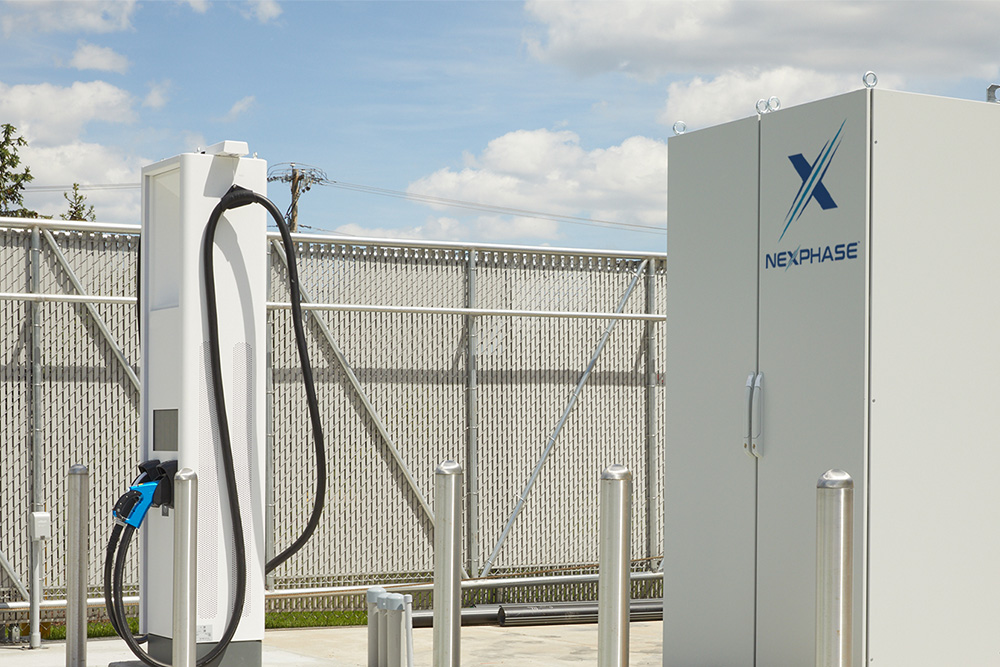
NexPhase™, the first intelligent EV switchgear, is a turnkey solution that contains the entire infrastructure required between the utility service and Level 3 DC fast chargers. Unlike any switchgear of its kind, NexPhase™ features cutting-edge grid intelligence for EV charger monitoring through UNITE™.
UNITE™ grants CPOs access to critical EV charger infrastructure and real-time monitoring information. With early detection of EV charger deficiencies and system performance diagnostics provided by UNITE™, Charge Point Operators (CPOs) are provided with the tools to improve uptime, extend equipment service life, and enhance the reliability of their EV charger systems.


