


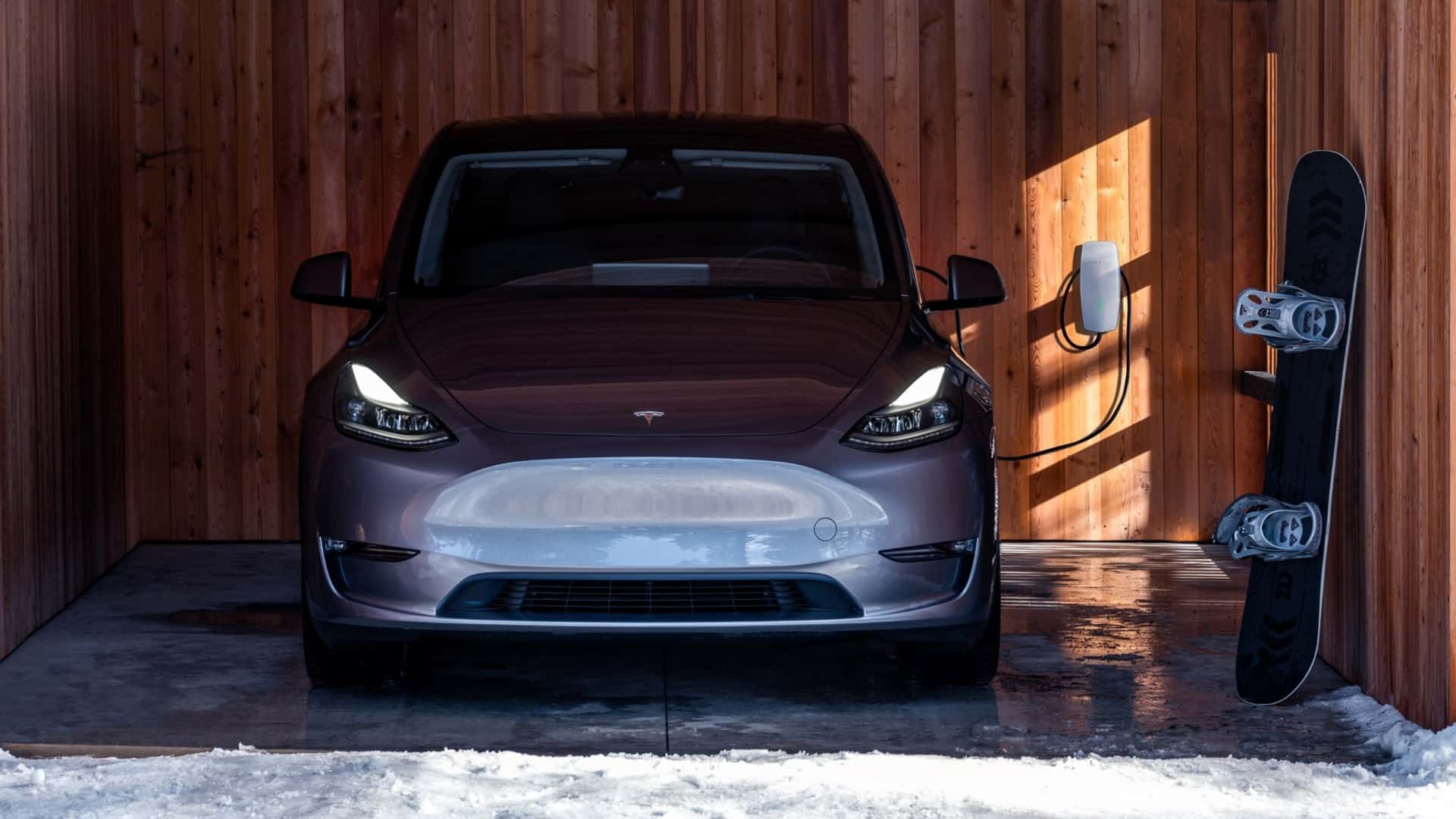
Tesla is working on an inductive EV charging platform, the company head of design Franz von Holzhausen told Jay Leno in a video review of the Cybertruck that also featured the company’s VP of Vehicle Engineering, Lars Moravy.
“Oh, we’re working on inductive charging,” Von Holzhausen said after Leno asked a charging-related question. “So you don’t even need to plug something in at that point. You just pull in your garage, drive over the pad, and you’re charging.”
Von Holzhausen did not provide additional details about Tesla‘s upcoming wireless inductive charger.

This is not the first time Tesla has hinted at the possibility of offering inductive wireless charging for its electric vehicles. At the shareholder event in March, Tesla released a photo of a Model S that appeared to be wirelessly charging in a garage.
That started rumors that Tesla is working on inductive charging, but the company didn’t confirm these rumors until now.
A wireless charging system for EVs will allow Tesla owners to charge their cars by simply pulling over a stationary platform or device in their garage, eliminating the need to plug in vehicles directly. While plugging in an EV does not require additional time and effort, wireless charging is indeed a more seamless way to charge.
Understandably, installing an inductive charger in your garage is bound to be significantly more expensive than a installing a traditional Level 2 charger. That’s because it requires installing an inductive pad into the garage floor, and that could involve embedding it into the concrete.
Naturally, installing a wall-mounted charger that needs to be hooked up to the electrical panel adds cost to that. In addition, the vehicle also needs to be equipped with an inductive receiver, which costs more money and adds weight to the car.
It’s worth noting that Tesla bought German wireless charging company Wiferion this summer, only to sell it in October. However, the EV maker has kept Wiferion’s engineers on board, which probably means they were assigned to work on Tesla’s wireless charger program.


